Stellar Streams · Galactic Dynamics
Brigette Segovia
2nd Year PhD Candidate
University of Michigan Department of Astronomy
323 West Hall
1085 S. University Ave
Ann Arbor, MI 48109
About
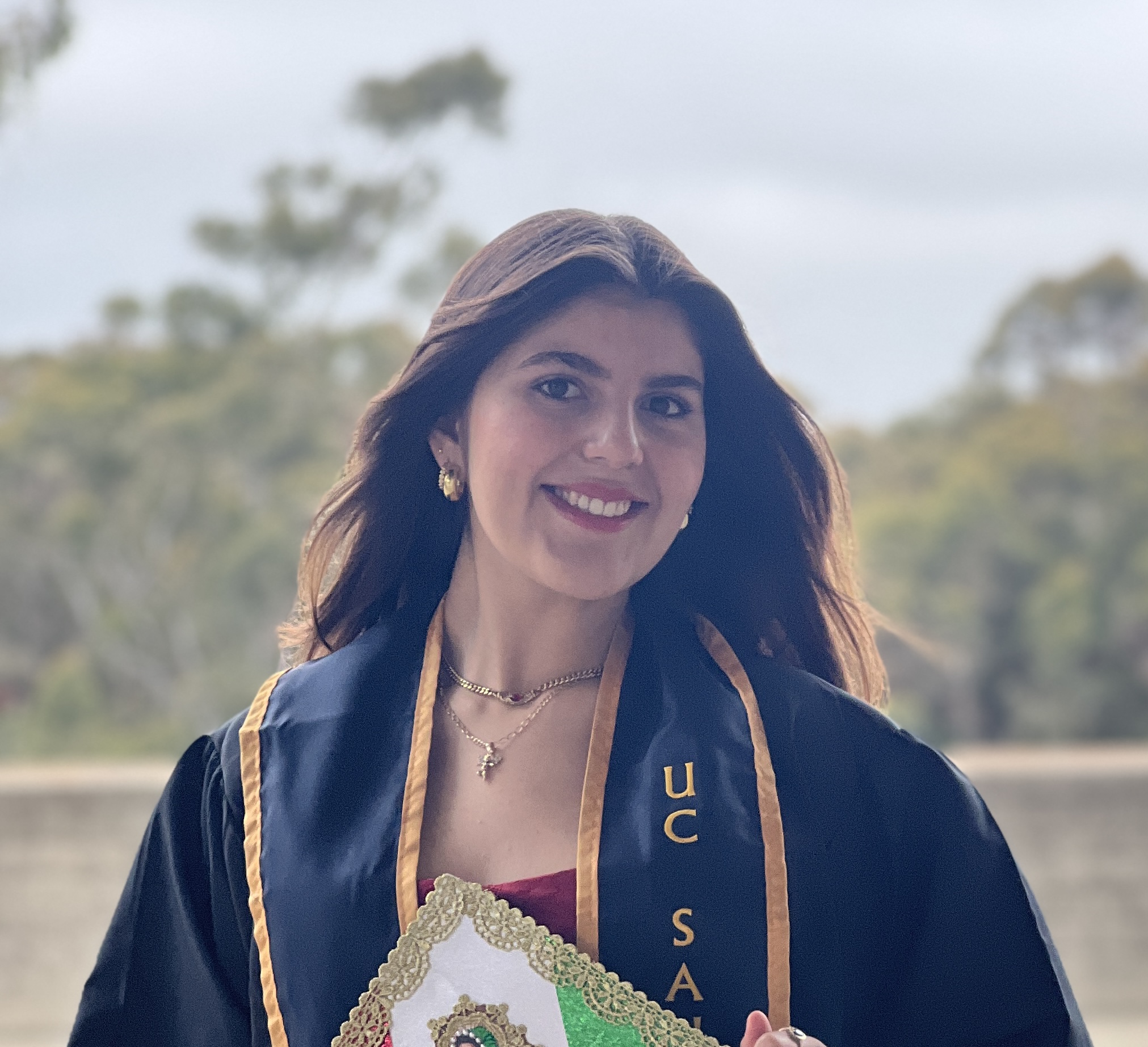
I am an astrophysics PhD student working with Monica Valluri on the dynamics of stellar stream interactions with dark matter halos. I grew up in San Diego, California, and earned my B.S. in Physics with a Specialization in Astrophysics from the University of California, San Diego. As an undergraduate, I worked with researcher Ana Bonaca on detecting dark matter subhalos using stellar streams, and with Professor Adam Burgasser on Late-M and L dwarf companions.
Research
My research focuses on the dynamics of stellar streams formed from globular clusters that were originally embedded in dwarf galaxies later accreted by the Milky Way. I use numerical simulations and particle-spray methods to study how the evolving tidal field of a parent dwarf galaxy can shape stream morphology, produce gaps and spurs, and influence the kinematics of streams such as GD-1. I am interested in using stellar streams as probes of dark matter structure, galaxy accretion history, and the dynamical evolution of the Milky Way.
Stellar Streams
I study how dwarf galaxies and dark matter halos shape the structure, morphology, and kinematics of globular-cluster stellar streams.
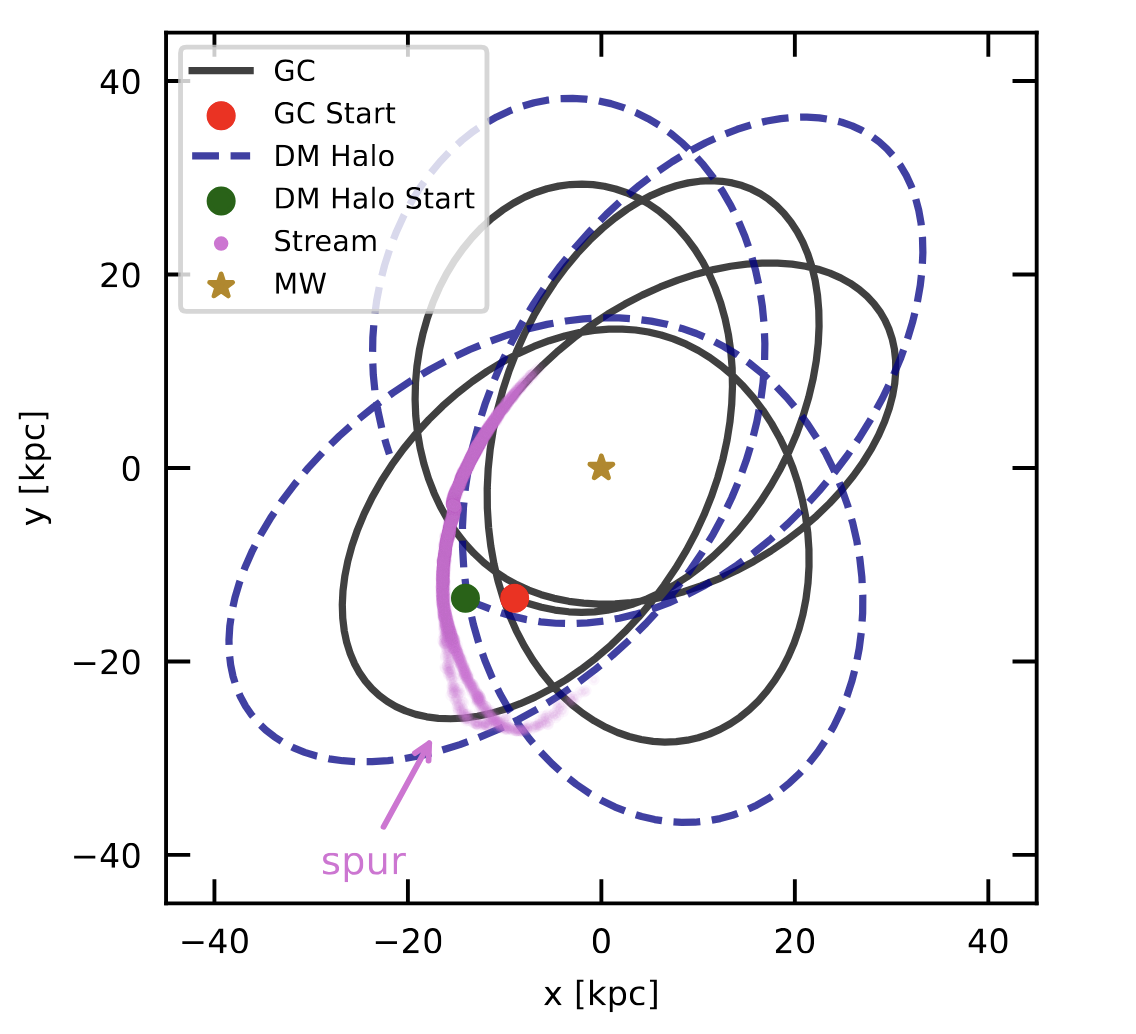
Figure 1. Stellar stream at z = 0 after ~3 Gyr in galactocentric coordinates, showing repeated GC-DG encounters and a clear spur.

Examples of simulated stellar streams at the end of 3 Gyr in ψ1 vs ψ2 coordinates.
DESI Collaboration
I am a member of the Dark Energy Spectroscopic Instrument (DESI) collaboration, which uses spectroscopic observations from the Mayall 4-meter telescope at Kitt Peak National Observatory. In addition to mapping galaxies and quasars, DESI provides spectra for stars in the Milky Way halo, helping identify stellar stream members and measure their radial velocities and chemical information. These data connect directly to stellar stream studies by improving constraints on stream orbits, progenitors, and the dark matter structure shaping them.
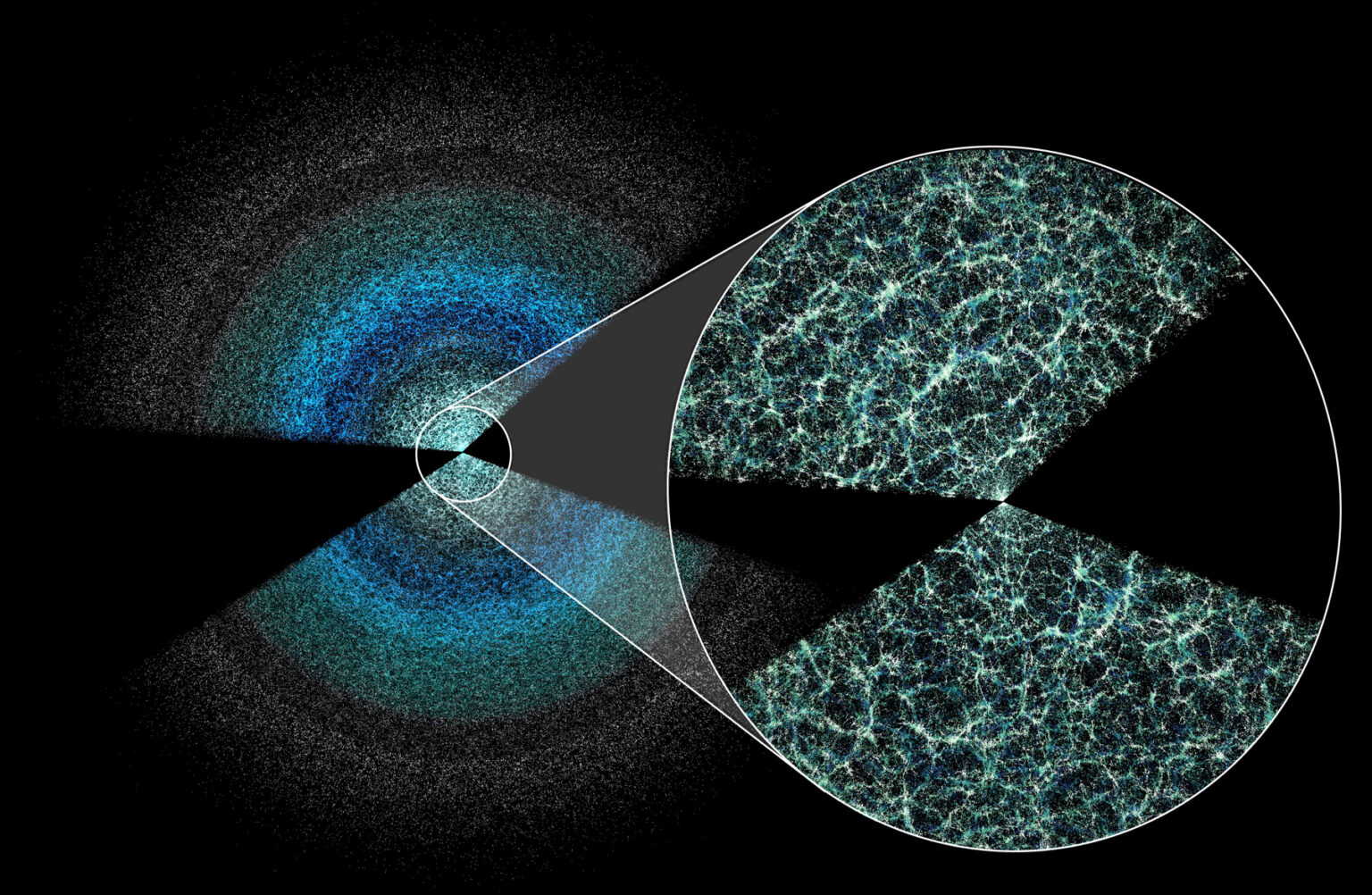
Image credit: DESI
CV
Contact
Feel free to reach out or connect with me through any of the links below.